
Domino’s
Domino’s: The Quiet Power of a Global Delivery Engine
Few consumer brands have embedded themselves into everyday life as seamlessly as Domino’s. It is not just a pizza company – it is a logistics platform disguised as comfort food. For millions of customers, Domino’s is the default answer to a simple question: “What’s easy tonight?” That habitual demand, reinforced by speed, value, and convenience, underpins a business that compounds through frequency, not novelty.
APR, 2026_
Everyday demand, system-led execution, and the discipline of operational excellence
Download Article
Find more on Socials
Founded in 1960 in Michigan, Domino’s has evolved from a single-store operation into one of the most sophisticated quick-service restaurant systems in the world. Unlike traditional restaurant businesses that rely heavily on foot traffic, Domino’s built its model around delivery from the outset. That singular focus has enabled it to refine operations, standardise processes, and scale globally through a predominantly franchised network.
At the heart of Domino’s model is its system. Franchisees operate the vast majority of stores, while the parent company provides the infrastructure: brand, technology, supply chain, and marketing. This asset-light structure drives high returns on capital, with franchise royalties and supply chain revenues generating consistent, high-margin cash flows. Domino’s does not need to own every store to control the customer experience – it owns the playbook.
What differentiates Domino’s is not the product, but the process.
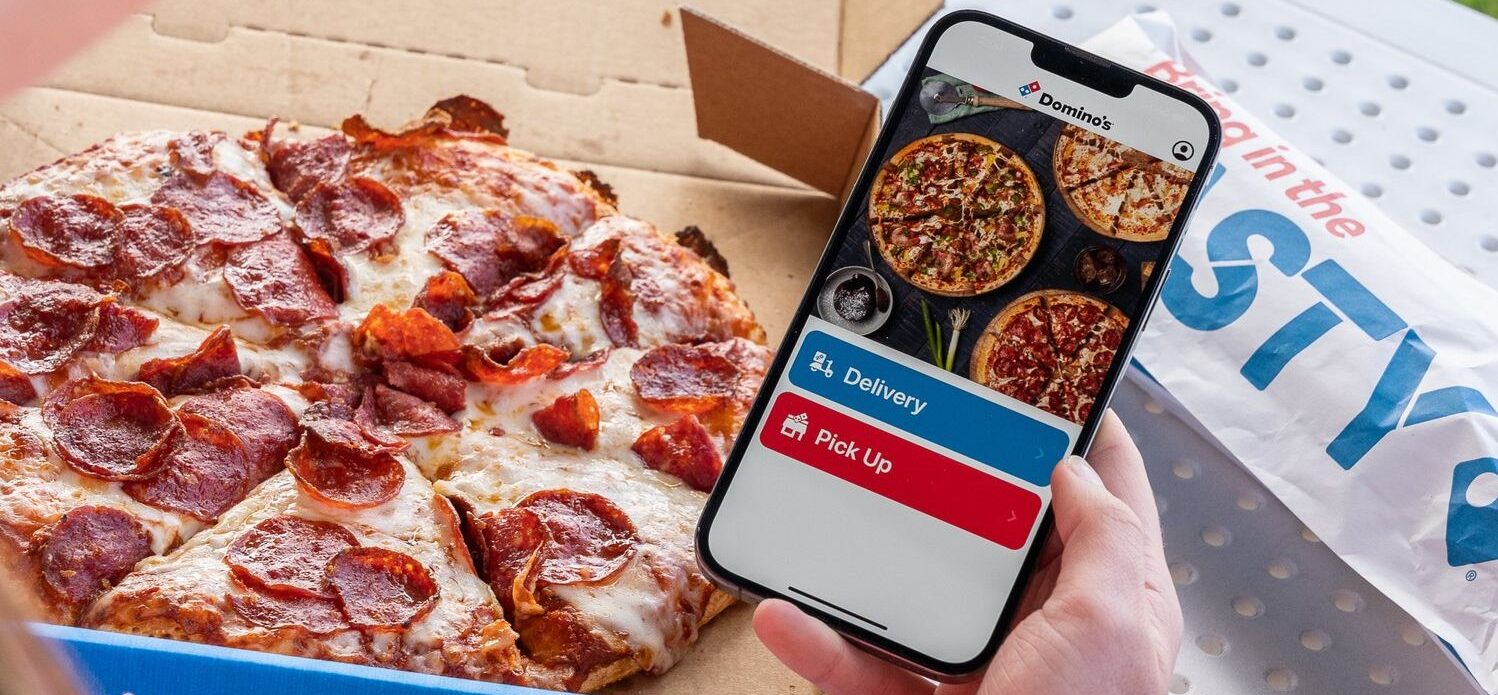
Over the past decade, Domino’s has transformed itself into a technology-first operator. Its digital platforms – spanning mobile apps, online ordering, and integrated loyalty programs – now account for the majority of sales in key markets. Features such as real-time order tracking, predictive ordering, and seamless payments are not gimmicks; they reduce friction, increase order frequency, and deepen customer loyalty. In effect, Domino’s has turned pizza into a repeatable, data-driven transaction.This operational discipline extends into its supply chain. Domino’s controls dough manufacturing, ingredient sourcing, and distribution in many of its core markets, creating both cost advantages and consistency. Scale matters: as the store base grows, so too does the efficiency of the network, reinforcing a virtuous cycle where franchisees benefit from lower input costs and stronger unit economics, encouraging further expansion.
The growth algorithm is simple, but powerful.
Domino’s expands through new store openings, same-store sales growth, and international market penetration. The brand’s value positioning travels well globally, particularly in markets with rising middle classes and increasing demand for convenience. Importantly, the model does not rely on constant menu innovation or pricing power alone – it is driven by frequency. A customer who orders once a week is far more valuable than one who orders once a month, and Domino’s entire system is designed to maximise that repeat behaviour.
Financially, this translates into a highly attractive profile. Royalty streams and supply chain income provide recurring, predictable cash flows, while the capital intensity sits largely with franchisees. This enables strong free cash generation, which has historically been returned to shareholders through buybacks and dividends, while still funding technology investment and global expansion.
There are risks.
Consumer spending is cyclical, and value-oriented businesses can still face pressure during periods of cost inflation or economic slowdown. Competition from aggregators and local players continues to evolve, particularly as delivery platforms broaden choice. However, Domino’s retains a structural advantage: it controls its own delivery ecosystem. Unlike third-party platforms that take a share of economics, Domino’s owns the customer relationship, the data, and the last mile.
Domino’s is often misunderstood as a simple fast-food chain. In reality, it is a scaled, technology-enabled distribution network with a powerful brand, recurring revenues, and global growth optionality. It wins not by being the most exciting, but by being the most reliable. And in investing, as in dinner decisions, reliability is often what compounds best.